
Terrorism
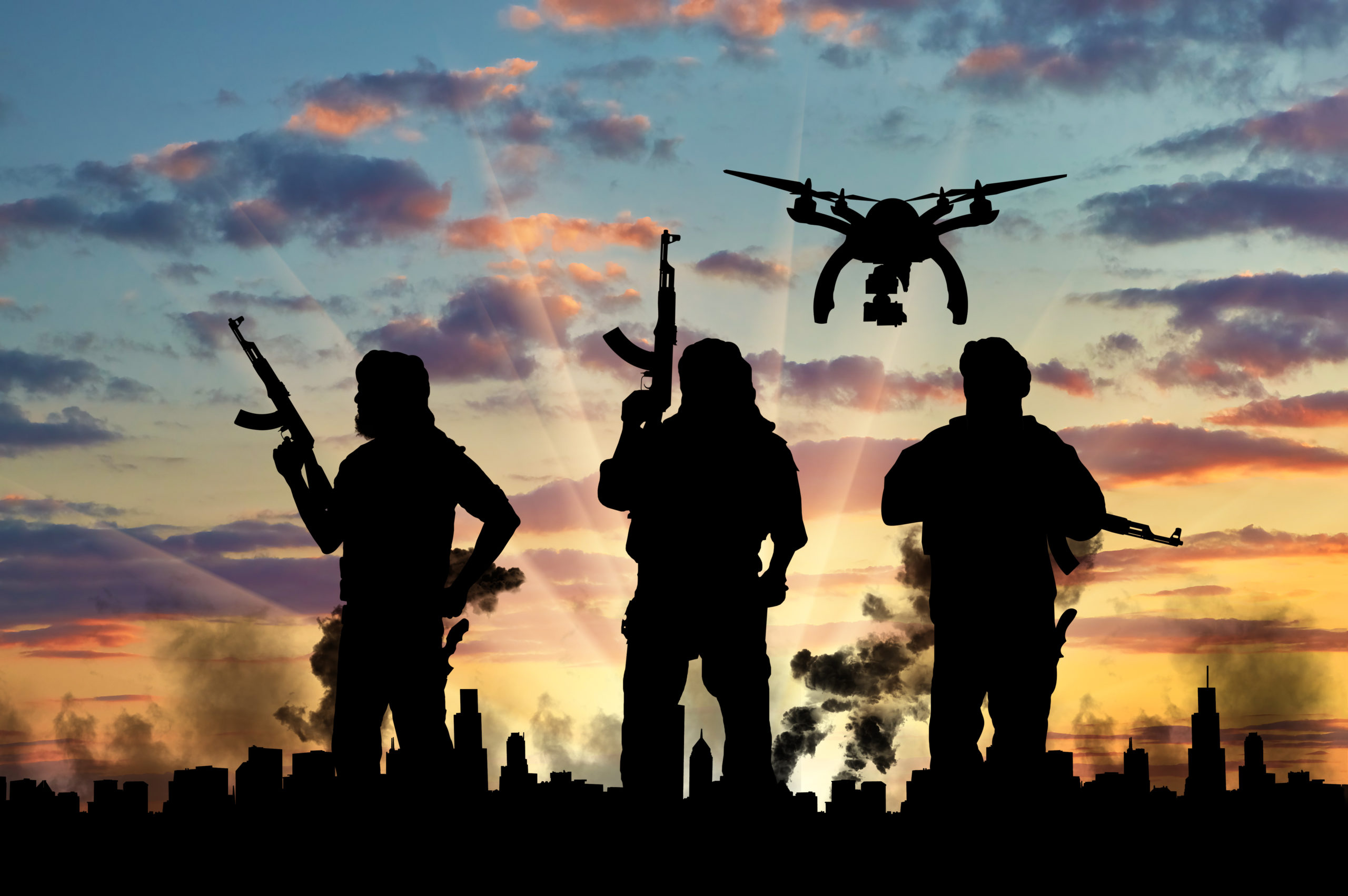
Terrorism is the systematic use of terror especially as a means of coercion. Terrorism has been practiced by a broad array of political organizations for furthering their objectives. It has been practiced by both right-wing and left-wing political parties, nationalistic groups, religious groups, revolutionaries, and ruling governments. One form is the use of violence against noncombatants for the purpose of gaining publicity for a group, cause, or individual.
The perpetrators of acts of terrorism can be individuals, groups, or states. According to some definitions, clandestine or semi-clandestine state actors may also carry out terrorist acts outside the framework of a state of war. However, the most common image of terrorism is that it is carried out by small and secretive cells, highly motivated to serve a particular cause and many of the most deadly operations in recent times, such as the September 11 attacks, the London underground bombing, and the 2002 Bali bombing were planned and carried out by a close clique, composed of close friends, family members and other strong social networks. These groups benefited from the free flow of information and efficient telecommunications to succeed where others had failed.
To avoid detection, a terrorist will look, dress, and behave normally until executing the assigned mission. Some claim that attempts to profile terrorists based on personality, physical, or sociological traits are not useful. The physical and behavioral description of the terrorist could describe almost any normal person. However, the majority of terrorist attacks are carried out by military age men, aged 16–40.
Terrorist attacks are often targeted to maximize fear and publicity, usually using explosives or poison. There is concern about terrorist attacks employing weapons of mass destruction. Terrorist organizations usually methodically plan attacks in advance, and may train participants, plant undercover agents, and raise money from supporters or through organized crime. Communication may occur through modern telecommunications, or through old-fashioned methods such as couriers.
The FBI appears to be ready for a chemical, biological or radiological terrorist attack, but the rest of the Justice Department “is not prepared,” according to a blistering audit.
In a report to the U.S. Center for Terrorism the Rand Corporation stated:
Al Qaeda clearly represents the principal focus of current U.S. concern about transnational terrorism. The network has not only explicitly defined its ideological and operational agenda as one directed against American citizens and property, it has also demonstrated a proven capability to effectively employ land, air, and sea modalities against target venues that have ranged from hotels to state-of-the-art warships. Nothing suggests that the group’s hardcore leadership has changed its views since December 2003, when bin Laden vowed to pursue Americans “in their own backyard.”
That said, it is evident that the character of al Qaeda today differs markedly from what it was when it organized and executed the suicide attacks of September 11, 2001. The loss of its safe haven in Afghanistan, combined with the capture and/or elimination of many of its critical field commanders and functionaries, has forced the group to reconfigure its operational agenda—away from centrally controlled strategic assaults executed by an inner core of jihadist activists and toward tactically oriented strikes undertaken by affiliated cells (and sometimes individuals) as and when opportunities arise. In many ways, the largely monolithic structure that emerged out of Afghanistan in the late 1990s now better correlates to an amorphous “movement of movements” that is more nebulous, segmented, and polycentric in character.
Based on these developments, one can postulate four trends that are likely to become manifest, all of which have relevance for threat contingencies in the United States:
In addition to the terrorist threats posed by al Qaeda and now ISIS, both associated and independent radical jihadists, a growing groundswell of domestically inspired radicalism has emerged that appears to be based on the spreading phenomenon of anti-globalization (AG). The AG movement has had an impact on at least three homegrown entities—all of which have demonstrated, in varying degrees, an explicit penchant for violence and civilian-directed action:
To help resist this form of catastrophe, the Vivos shelters are designed to withstand:
This page is based on the copyrighted Wikipedia article Terrorism; it is used under the Creative Commons Attribution-ShareAlike 3.0 Unported License (CC-BY-SA). You may redistribute it, without graphics owned by The Vivos Group, verbatim or modified, providing that you comply with the terms of the CC-BY-SA.
Vivos is featured on thousands of broadcasts. Everyone wants to know why & how people are preparing.


Don’t wait for disaster to strike. Join the Vivos network or own a private shelter and be prepared for whatever comes next.