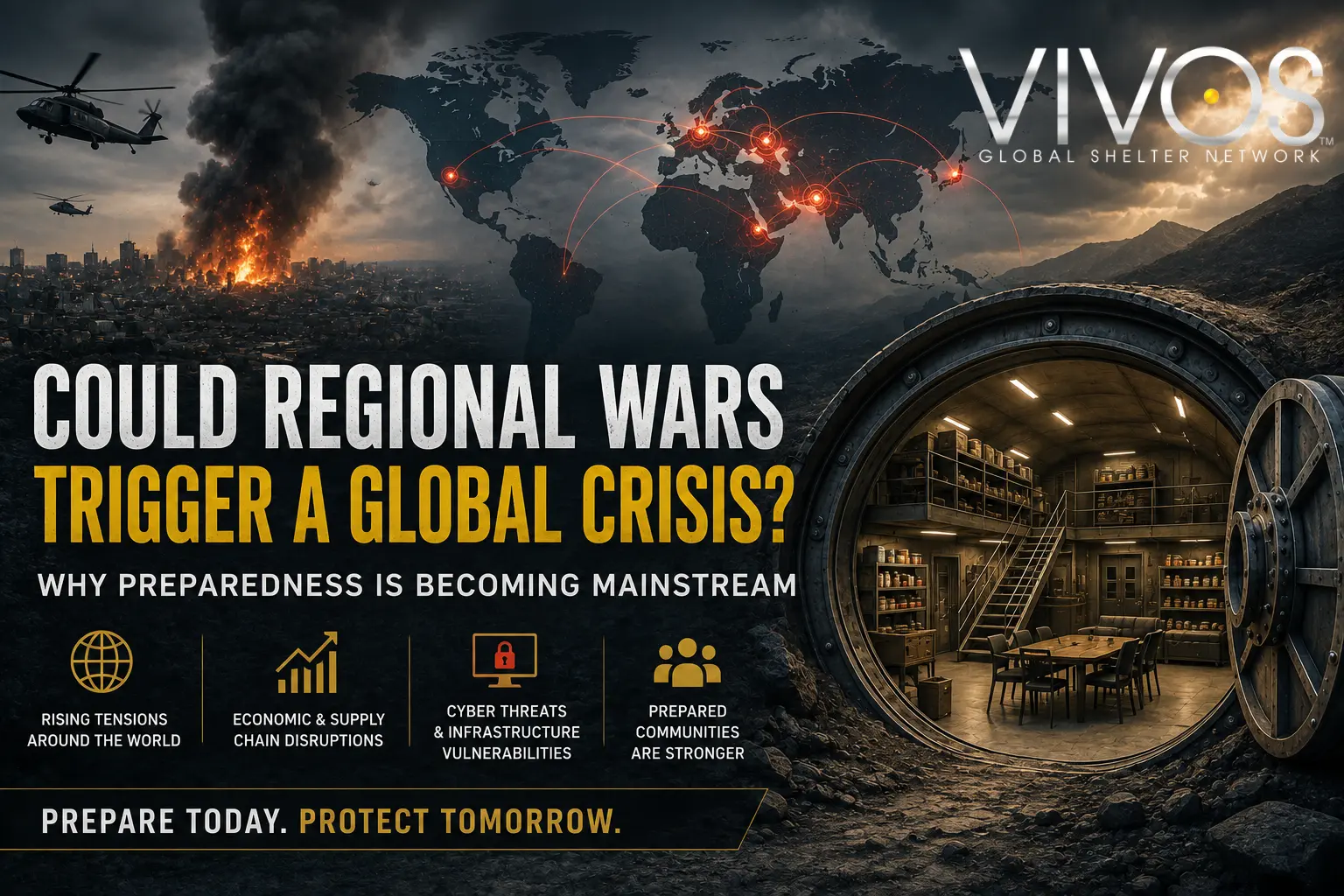
 Global Tensions Are No Longer a Distant Concern
For decades, many people viewed major geopolitical conflicts as events that happened far away, with limited impact on daily life. Today, that assumption is changing.
Regional conflicts are becoming increasingly interconnected with global energy markets, international trade, food production, supply chains, cybersecurity, and economic stability. A conflict in one part of the world can quickly affect millions of people thousands of miles away.
As uncertainty grows, more individuals, families, and organizations are beginning to ask an important question:
What happens if a regional conflict escalates into a global crisis?
The answer is driving a renewed interest in preparedness, resilience, and long-term survival planning.
How Regional Conflicts Create Global Consequences
Modern civilization is deeply interconnected.
When military conflicts emerge in strategically important regions, the effects often extend far beyond the battlefield.
Potential consequences include:
- Rising energy prices
- Supply chain disruptions
- Food shortages
- Inflation
- Cyber attacks
- Transportation delays
- Economic instability
- Increased geopolitical tensions
History has repeatedly demonstrated that regional conflicts can create global ripple effects affecting businesses, governments, and households worldwide.
Today, those risks are amplified by globalization and dependence on complex infrastructure systems.
Energy Security Remains One of the Greatest Vulnerabilities
One of the first impacts of major geopolitical conflict is often energy disruption.
Critical shipping routes, oil production facilities, pipelines, and energy infrastructure can become vulnerable during periods of instability.
When energy supplies are threatened:
- Fuel prices rise
- Transportation costs increase
- Food production becomes more expensive
- Manufacturing slows
- Inflation accelerates
Because nearly every aspect of modern life depends on affordable energy, even temporary disruptions can create significant economic pressure.
This is one reason many preparedness experts consider energy security a critical component of long-term resilience.
Supply Chains Are More Fragile Than Most People Realize
Most consumers never see the vast network required to keep store shelves stocked.
Food, medicine, fuel, electronics, and essential goods all depend on global transportation systems functioning efficiently.
During geopolitical crises, supply chains can experience:
- Shipping delays
- Trade restrictions
- Port closures
- Material shortages
- Increased transportation costs
The result is often reduced availability of essential products and higher prices for consumers.
Recent years have shown how quickly shortages can emerge when global systems face unexpected stress.
Cyber Warfare Is Becoming a Modern Battlefield
Unlike traditional conflicts, modern warfare increasingly includes cyber operations.
Critical infrastructure can become a target, including:
- Electrical grids
- Water systems
- Telecommunications
- Banking networks
- Transportation systems
A successful attack on key infrastructure could create disruptions that affect millions of people without a single conventional weapon being deployed.
Preparedness today is no longer limited to natural disasters. It also includes planning for technological and infrastructure vulnerabilities.
Why More People Are Paying Attention to Preparedness
Preparedness was once viewed as a niche interest.
Today, it is increasingly recognized as a practical approach to managing uncertainty.
Families are beginning to think more seriously about:
- Emergency food storage
- Backup power systems
- Water security
- Alternative communication methods
- Secure shelter options
Preparedness is not about predicting a specific event.
It is about creating options before they become necessary.
The Growing Interest in Underground Shelters
As awareness of global risks increases, underground shelters continue to gain attention.
Historically, underground facilities have provided protection from:
- Severe weather events
- Civil unrest
- Infrastructure failures
- Radiation exposure
- Long-term emergencies
Modern underground shelters have evolved significantly beyond traditional bunkers.
Many now incorporate:
- Independent power generation
- Advanced air filtration systems
- Water purification systems
- Food storage facilities
- Secure living accommodations
For individuals seeking long-term resilience, underground shelters represent one component of a broader preparedness strategy.
Why Community-Based Survival Is Gaining Momentum
One of the most important lessons from history is that survival is rarely an individual effort.
Long-term resilience requires more than supplies.
It requires:
- Security
- Medical support
- Technical expertise
- Resource management
- Infrastructure maintenance
- Communication systems
This is why community-based preparedness models are attracting growing interest.
Rather than facing uncertainty alone, organized communities can share responsibilities, skills, and resources.
How Terra Vivos Approaches Long-Term Preparedness
As interest in preparedness grows, Terra Vivos has become one of the most recognized names in the survival shelter industry.
Unlike traditional private bunkers designed for isolated occupancy, Terra Vivos focuses on developing large-scale underground survival communities designed for long-term resilience.
Terra Vivos projects emphasize:
- Hardened underground shelter systems
- Community-based survival planning
- Independent infrastructure
- Security-focused environments
- Long-term occupancy capabilities
Popular Terra Vivos shelter projects include:
- Vivos xPoint – One of the world’s largest survival shelter communities
- Vivos Europa One – A luxury underground survival complex in Europe
- Vivos Indiana – A fully equipped community shelter designed for long-term occupancy
These projects are designed to help members prepare for a wide range of potential emergencies while benefiting from community support and shared infrastructure.
The Importance of Planning Before a Crisis Begins
One of the most common mistakes people make is assuming there will be plenty of time to react.
History suggests otherwise.
When major disruptions occur:
- Supplies disappear quickly
- Infrastructure becomes overloaded
- Travel becomes difficult
- Resources become limited
Preparedness is most effective when implemented before it becomes urgent.
The goal is not fear.
The goal is resilience.
Could a Regional Conflict Become a Global Crisis?
No one can predict the future with certainty.
However, global events continue to demonstrate how interconnected our world has become.
A conflict that begins in one region can influence:
- Energy markets
- Food production
- Transportation systems
- Financial markets
- National security
Whether the challenge comes from geopolitical tensions, economic disruption, infrastructure failure, or another unforeseen event, preparedness provides options that may not exist during a crisis.
Explore Terra Vivos Survival Shelter Communities
If you are interested in learning more about long-term preparedness and underground survival communities, explore Terra Vivos shelter projects:
- Learn About Vivos xPoint
- Explore Vivos Europa One
- Discover Vivos Indiana
- View All Available Shelters
- Contact Terra Vivos
Final Thoughts
Regional conflicts have always shaped history, but in today’s interconnected world, their impact can extend across continents within days.
The growing interest in preparedness reflects a simple reality:
Uncertainty is increasing, and resilience matters.
Whether through emergency planning, self-sufficiency measures, or exploring advanced shelter solutions, taking steps today can create valuable options for tomorrow.
Because when a crisis begins, preparation is often the difference between reacting and being ready.


