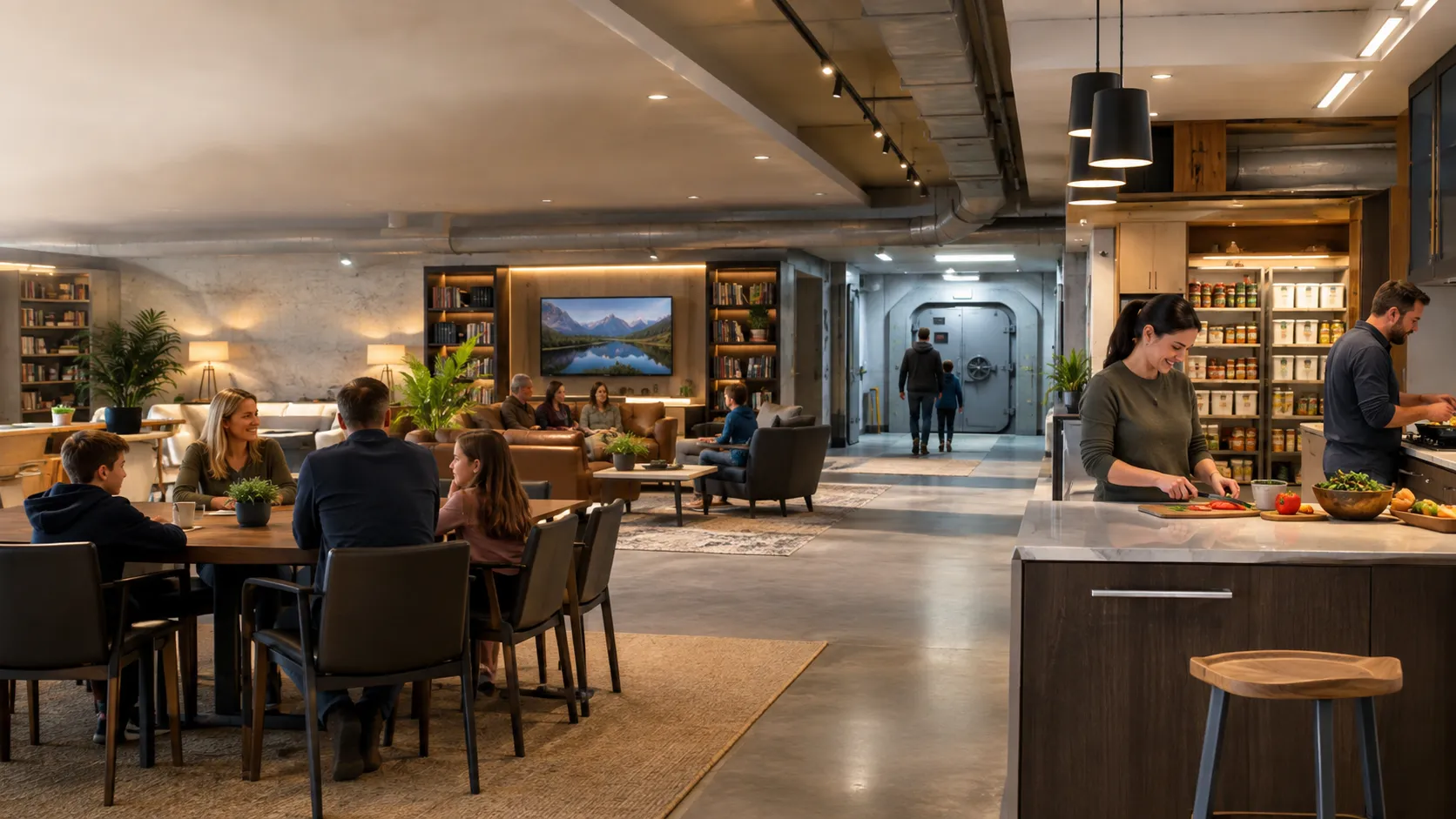
When most people imagine an underground survival shelter, they picture dark concrete rooms, steel doors, and emergency supplies stacked against the walls.
Modern underground survival communities can be very different.
Large-scale facilities are designed not only to provide protection during emergencies, but also to support people for extended periods when normal infrastructure may be unavailable.
That raises an interesting question:
What would everyday life actually look like inside an underground survival community?
From living quarters and shared facilities to food, power, security, and community responsibilities, life underground can be designed around maintaining as much stability and normalcy as possible.
Living Underground Doesn’t Mean Giving Up Everyday Life
A long-term survival community needs more than a place to sleep.
Residents may require:
- Private or shared living quarters
- Bathrooms and hygiene facilities
- Food preparation areas
- Dining spaces
- Medical facilities
- Recreation areas
- Communication systems
- Storage facilities
The objective is to create an environment where residents can continue essential daily routines even when conditions outside are uncertain.
How Food and Water Are Managed
Food and water are among the most important resources in any long-term emergency.
Underground communities can incorporate dedicated areas for:
- Long-term food storage
- Water storage
- Water purification
- Food preparation
- Waste management
Unlike a short-term emergency shelter, a community designed for extended occupancy must carefully manage its resources and plan for ongoing consumption.
Independent Power and Utilities
Modern life depends heavily on electricity.
Inside an underground survival community, maintaining essential utilities can therefore be critical.
Depending on the facility, systems may include:
- Independent power generation
- Backup power systems
- Climate control
- Air filtration
- Water systems
- Communications infrastructure
These systems are intended to reduce dependence on external infrastructure during prolonged emergencies.
Security and Controlled Access
Security is another important part of underground community life.
Large survival facilities may use controlled entrances, security systems, reinforced structures, and designated procedures for entering and leaving the facility.
The goal is not simply to keep people underground.
It is to create a controlled environment where residents can maintain safety and order during uncertain conditions.
Community Life Is a Major Part of Survival
One of the biggest differences between a private bunker and a survival community is the presence of other people.
A large community can include individuals with different skills and experience, including:
- Medical professionals
- Engineers
- Technicians
- Farmers and food specialists
- Security personnel
- Communications specialists
- Maintenance workers
These skills can become extremely valuable during a prolonged emergency.
Residents may also share responsibilities for maintaining common areas, managing resources, and supporting the wider community.
What Do People Do During Long Periods Underground?
Long-term sheltering shouldn’t be limited to survival essentials.
Maintaining mental and emotional well-being is also important.
Depending on the facility, underground communities may provide spaces for:
- Exercise
- Education
- Recreation
- Social activities
- Dining
- Community meetings
- Hobbies and entertainment
Creating a sense of normalcy can help residents cope with the psychological challenges of extended sheltering.
How Terra Vivos Approaches Underground Community Living
Terra Vivos focuses on large-scale underground survival communities designed around protection, sustainability, and community resilience.
Its projects include:
Vivos xPoint — A large underground survival community consisting of hundreds of hardened military-built bunkers in South Dakota.
Vivos Europa One — A luxury underground survival complex developed within a former Cold War military facility in Germany.
Vivos Indiana — An underground survival community designed to support long-term preparedness.
Rather than treating an underground shelter simply as a place to hide, the Terra Vivos approach emphasizes the infrastructure and community systems needed for extended occupancy.
Is Underground Community Life for Everyone?
Not necessarily.
Living underground during an emergency would involve adapting to shared environments, community rules, resource management, and limited access to the outside world.
For people considering long-term preparedness, however, an underground community can provide something that is difficult to create alone:
A combination of shelter, infrastructure, resources, security, and community.
Final Thoughts
Life inside an underground survival community would be different from everyday life above ground—but it doesn’t necessarily mean living in darkness or isolation.
With appropriate infrastructure, residents can have living spaces, food, water, utilities, recreation, security, and opportunities for community interaction.
Ultimately, long-term survival is about more than having a reinforced shelter.
It’s about creating an environment where people can continue living when normal systems are disrupted.
Explore Terra Vivos Survival Communities
Learn more about Terra Vivos underground survival communities and explore available preparedness options.
FAQs
What is an underground survival community?
An underground survival community is a large-scale shelter designed to accommodate groups of people during emergencies while providing infrastructure such as living quarters, utilities, food storage, security, and other shared facilities.
What do people do inside an underground survival community?
Daily activities can include preparing meals, exercising, working, learning, maintaining facilities, participating in community responsibilities, and spending time in recreational or social areas.
How are food and water provided underground?
Survival communities may use long-term food storage, water storage and purification systems, and carefully managed resources to support residents during extended emergencies.
Can underground communities generate their own power?
Some facilities incorporate independent or backup power systems designed to reduce dependence on external electrical infrastructure.
Why is community important in long-term survival?
Communities allow people with different skills—including medical, engineering, maintenance, security, and agricultural expertise—to contribute to shared resilience.
Is an underground survival community better than a private bunker?
It depends on individual preparedness goals. A private bunker can provide privacy and independence, while a larger community can offer shared infrastructure, expertise, resources, and social support.


