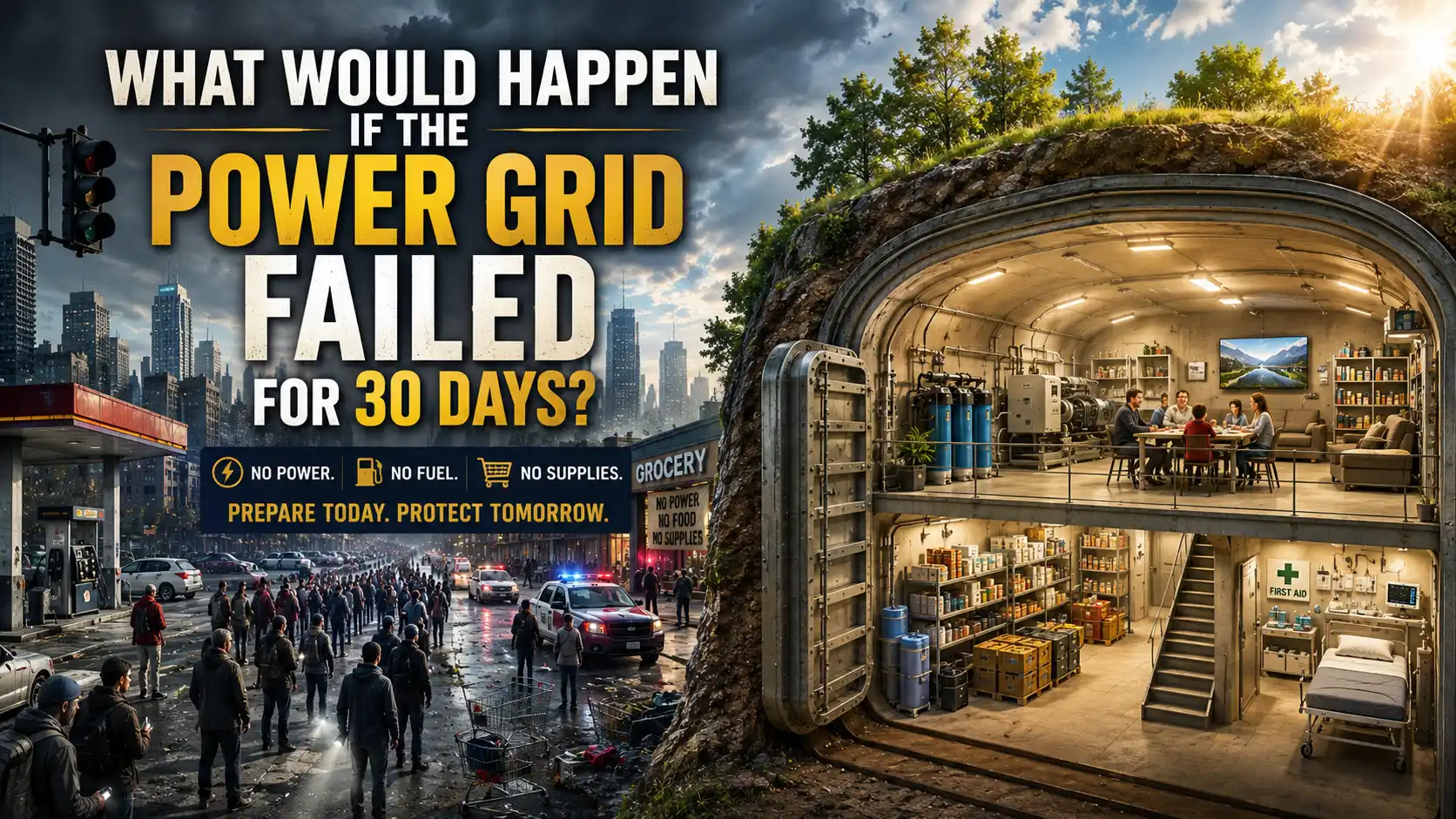
How a Month-Long Blackout Could Affect Daily Life—and Why Preparedness Matters
Power outages occur every year due to severe weather, equipment failures, and other unexpected events. Most are restored within hours or days.
However, governments, emergency management agencies, and infrastructure experts continue to study a more challenging scenario: a prolonged disruption to the electrical grid.
Growing concerns surrounding cyberattacks on critical infrastructure, increasingly frequent extreme weather events, aging utility systems, and geopolitical instability have brought greater attention to grid resilience across the United States and Europe.
Organizations including FEMA, the U.S. Department of Energy (DOE), CISA (Cybersecurity and Infrastructure Security Agency), and NERC (North American Electric Reliability Corporation) all emphasize the importance of emergency preparedness and infrastructure resilience.
This raises an important question:
What Would Happen If the Power Grid Failed for an Entire Month?
While no one can predict whether such an event will occur—or exactly how it would unfold—understanding the potential consequences helps explain why preparedness has become an increasingly important topic for families, businesses, and governments alike.
Why the Electrical Grid Is So Important
Electricity supports nearly every system modern society depends upon.
Without reliable power, many essential services become increasingly difficult to operate.
These include:
- Water treatment facilities
- Fuel distribution
- Hospitals
- Telecommunications
- Internet infrastructure
- Banking systems
- Grocery stores
- Transportation networks
- Emergency services
A prolonged outage wouldn’t simply mean sitting in the dark.
It could affect almost every aspect of daily life.
Current Challenges Facing Power Infrastructure
Energy experts continue to monitor several risks that could affect electrical infrastructure, including:
- Increasing cyber threats targeting critical infrastructure
- More frequent extreme weather events
- Aging electrical transmission systems
- Growing energy demand
- Geopolitical instability affecting energy security
Although governments and utility providers continue investing heavily in grid protection, emergency planners consistently recommend that households maintain preparedness plans for extended outages.
If the Grid Failed: What Could Happen?
Day 1–3: Immediate Disruption
During the first several days, many people would likely experience:
- Loss of lighting
- Limited internet connectivity
- Mobile networks becoming unreliable
- Refrigerated food beginning to spoil
- ATM outages
- Fuel shortages
- Long lines at grocery stores
- Panic buying of essential supplies
Many communities experienced similar—although much shorter—situations during hurricanes, winter storms, and other natural disasters.
Week One: Supply Chains Begin Slowing
As electricity remains unavailable, larger logistical problems begin emerging.
Potential impacts include:
- Reduced fuel deliveries
- Distribution center delays
- Grocery inventories shrinking
- Medical supply disruptions
- Temporary business closures
- Transportation delays
Modern supply chains rely heavily on electricity, communications, and transportation working together continuously.
Week Two: Critical Infrastructure Faces Pressure
After two weeks, public infrastructure may experience increasing strain.
Possible challenges include:
- Water treatment interruptions
- Hospital resource limitations
- Reduced emergency response capacity
- Communication outages
- Increased dependence on backup generators
- Difficulty preserving refrigerated medicines and food
Communities become increasingly reliant on emergency management resources during prolonged disruptions.
Week Three: Economic and Social Challenges Increase
As outages continue, economic activity could become significantly affected.
Potential consequences include:
- Manufacturing slowdowns
- Business closures
- Workforce disruption
- Transportation bottlenecks
- Rising inflation
- Continued shortages of essential goods
History has shown that communities with emergency plans often recover more effectively than those without adequate preparation.
Week Four: Long-Term Resilience Becomes Essential
After nearly a month without stable electricity, preparedness becomes far more important than convenience.
Families may require:
- Safe drinking water
- Long-term food supplies
- Alternative power sources
- Medical supplies
- Secure shelter
- Reliable communication methods
The longer infrastructure remains unavailable, the more valuable self-sufficiency becomes.
At-a-Glance: How a 30-Day Blackout Could Progress
| Timeframe | Potential Impact |
| Days 1–3 | Food spoilage, internet outages, fuel shortages, panic buying |
| Week 1 | Supply chain delays, business closures, transportation issues |
| Week 2 | Pressure on hospitals, water systems, emergency services |
| Week 3 | Economic disruption, inflation, shortages, infrastructure stress |
| Week 4 | Long-term resilience, independent resources and secure shelter become increasingly important |
Why Preparedness Is Becoming Mainstream
Preparedness is no longer viewed as something only for survival enthusiasts.
Today, many households prepare for disruptions caused by:
- Hurricanes
- Wildfires
- Winter storms
- Flooding
- Cybersecurity incidents
- Infrastructure failures
- Regional conflicts affecting energy supplies
Preparedness isn’t about expecting disaster.
It’s about reducing risk and improving resilience.
Why Underground Shelters Continue to Gain Attention
For individuals planning beyond basic emergency kits, underground shelters have become an increasingly discussed preparedness option.
Modern underground shelter systems can include:
- Independent power generation
- Water storage and purification
- NBC air filtration systems
- Climate-controlled environments
- Food storage capacity
- Secure living quarters
These features can help reduce dependence on public infrastructure during extended emergencies.
If you’d like to learn more about different preparedness scenarios, explore our Threat Resource Center, including:
- Nuclear Threat
- EMP Threat
- Super Volcano
- Tsunami
- Pole Shift
Why Community-Based Survival Offers Greater Long-Term Resilience
Long-term emergencies require far more than stored supplies.
Successful resilience often depends upon:
- Security
- Medical expertise
- Engineering
- Infrastructure maintenance
- Communications
- Resource management
This is why many preparedness professionals increasingly discuss community-based survival models rather than isolated survival.
Communities combine skills, shared infrastructure, and resources that are difficult for a single household to maintain alone.
How Terra Vivos Approaches Long-Term Preparedness
As interest in preparedness continues to grow worldwide, Terra Vivos has become one of the most recognized providers of community-based underground survival shelters.
Unlike traditional backyard bunkers designed primarily for individual families, Terra Vivos focuses on creating large-scale underground survival communities built for long-term resilience.
Terra Vivos projects emphasize:
- Hardened military-grade underground structures
- Community-based preparedness
- Independent infrastructure
- Backup power systems
- Water storage and purification
- NBC air filtration
- Security-focused environments
- Long-term occupancy planning
Some of Terra Vivos’ best-known projects include:
- Vivos xPoint – One of the world’s largest survival shelter communities, developed from a former U.S. Army munitions base.
- Vivos Europa One – A luxury underground survival complex built inside a Cold War military fortress in Europe.
- Vivos Indiana – A community-focused underground shelter designed for long-term occupancy.
Rather than simply providing shelter, Terra Vivos focuses on creating environments where members can benefit from shared infrastructure, security, and long-term sustainability.
Why Planning Before a Crisis Matters
History consistently demonstrates that waiting until a crisis begins dramatically reduces available options.
During major emergencies:
- Fuel supplies become scarce
- Grocery shelves empty quickly
- Roads become congested
- Emergency services become overwhelmed
- Recovery may take weeks—or longer
Preparing early allows individuals and families to make informed decisions rather than reacting under pressure.
Is Investing in Preparedness Worth It?
Preparedness looks different for every family.
For some, an emergency kit and backup generator may provide sufficient peace of mind.
For others concerned about prolonged infrastructure failures, investing in professionally designed underground shelter communities may represent an additional layer of resilience.
Preparedness should never be driven by fear.
It should be viewed as an investment in security, continuity, and long-term peace of mind.
Explore Terra Vivos Survival Communities
If you’re considering long-term preparedness, explore the Terra Vivos shelter communities designed for resilience during a wide range of potential emergencies.
Related Pages
- Vivos xPoint
- Vivos Europa One
- Vivos Indiana
- View All Shelters
- Membership Application
- Contact Terra Vivos
Final Thoughts
Electricity quietly powers nearly every aspect of modern civilization.
While no one can predict if a month-long grid outage will ever occur, examining the potential consequences highlights just how interconnected—and vulnerable—modern infrastructure can be.
Preparedness isn’t about expecting the worst.
It’s about ensuring you have options when the unexpected happens.
Whether you begin with emergency planning, backup resources, or explore advanced solutions like community-based underground shelters, taking action before a crisis offers far greater flexibility than reacting after one has already begun.
In an uncertain world, resilience remains one of the most valuable investments you can make.
Frequently Asked Questions
What would happen if the power grid failed for 30 days?
A prolonged outage could affect electricity, water systems, fuel distribution, communications, healthcare, food supply chains, transportation, and many other critical services.
What causes large-scale power grid failures?
Potential causes include severe weather, cyberattacks, equipment failures, aging infrastructure, natural disasters, and other large-scale disruptions.
How can families prepare for an extended blackout?
Preparation may include storing food and water, maintaining backup power, keeping emergency supplies, creating communication plans, and considering long-term shelter options.
Why are underground shelters useful during prolonged emergencies?
Modern underground shelters can provide secure living space, backup utilities, food storage, water systems, air filtration, and protection from various environmental hazards during extended disruptions.
What makes Terra Vivos different from traditional private bunkers?
Terra Vivos focuses on large-scale underground survival communities that combine hardened shelter infrastructure with long-term sustainability, shared resources, security, and community resilience.
Where can I learn more about Terra Vivos shelters?
Explore the Terra Vivos shelter projects, view available communities, submit a membership application, or contact the Terra Vivos team to learn more about long-term preparedness solutions.


