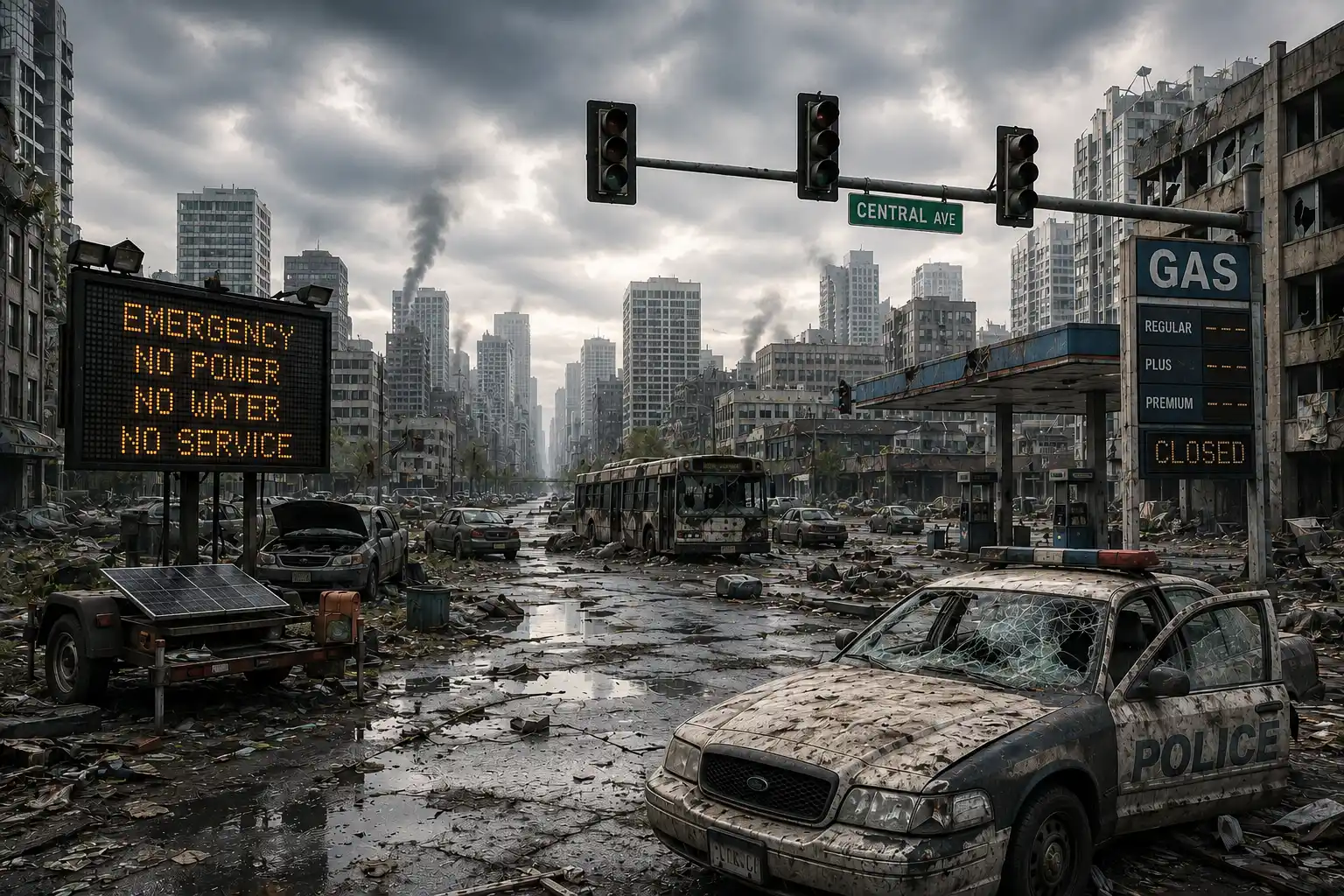
 In modern life, most people rarely think about how dependent we are on systems quietly working in the background every single day.
Electricity. Fuel. Internet. Food delivery. Banking. Emergency services.
We assume they’ll always be there.
But history shows that when large-scale crises occur, society can change much faster than most people expect.
The real question isn’t whether disruptions can happen.
It’s:
What happens when the systems holding society together stop functioning?
Society Runs on Fragile Systems
Modern civilization depends on interconnected infrastructure.
A disruption in one area often creates a chain reaction across everything else.
For example:
- Fuel shortages affect transportation
- Transportation delays impact food deliveries
- Power outages disrupt communications
- Banking issues create panic buying
- Supply shortages trigger civil unrest
Most cities only have a few days’ worth of food available at any given time.
If transportation networks stop, store shelves empty quickly.
We’ve already seen smaller versions of this during:
- Global pandemics
- Cyberattacks
- Severe weather disasters
- Economic disruptions
- Political instability
Now imagine those disruptions lasting weeks—or months.
The First Phase: Panic
When people realize essential services are failing, panic spreads quickly.
The first things that usually disappear are:
- Fuel
- Food
- Water
- Medicine
- Batteries
- Emergency supplies
Long lines form overnight.
ATMs stop working.
Gas stations run dry.
Grocery stores become empty within hours.
During crises, fear spreads faster than facts.
And once panic begins, normal behavior changes rapidly.
The Breakdown of Public Services
As pressure increases, emergency systems become overwhelmed.
Police, hospitals, firefighters, and government agencies can only handle so much at once.
In a prolonged crisis:
- Emergency response times increase
- Medical care becomes limited
- Communication systems fail
- Transportation slows or stops
- Public order becomes difficult to maintain
This is when localized disruptions can evolve into widespread instability.
Infrastructure Failure Changes Everything
Most people underestimate how much modern life depends on electricity and logistics.
Without power:
- Refrigeration stops
- Water systems fail
- Internet and communications collapse
- Fuel pumps stop operating
- Supply chains freeze
Without transportation:
- Food deliveries stop
- Medical supplies become scarce
- Critical repairs cannot happen
The longer systems remain offline, the harder recovery becomes.
The Rise of Social Instability
One of the greatest risks during societal breakdown isn’t always the original disaster.
It’s what happens afterward.
When people become desperate for food, water, fuel, or medicine, social order can deteriorate rapidly.
History repeatedly shows patterns of:
- Looting
- Riots
- Theft
- Violence
- Organized criminal activity
In large-scale emergencies, heavily populated urban areas often become the most unstable.
This is why many preparedness experts emphasize:
- Security
- Self-sufficiency
- Remote or protected shelter locations
- Community support systems
Why Long-Term Preparedness Matters
Short-term emergencies are survivable for most people.
Long-term disruptions are different.
A few days without power is inconvenient.
Several months without functioning infrastructure changes everything.
Preparedness today is shifting beyond basic emergency kits toward long-term resilience planning.
People are increasingly considering:
- Independent water systems
- Backup energy
- Food storage
- Off-grid living solutions
- Secure underground shelters
Why Underground Shelters Are Gaining Global Attention
Underground shelters are designed to provide protection during extreme scenarios, including:
- Severe weather
- Civil unrest
- Radiation exposure
- Supply chain collapse
- Long-term infrastructure failure
Modern survival shelters are no longer simple bunkers.
Many now include:
- Air filtration systems
- Independent power generation
- Water purification systems
- Medical facilities
- Secure living quarters
- Long-term food storage
The goal is not just survival for a few days—
but maintaining stability during prolonged uncertainty.
The Importance of Community Survival
One major flaw in isolated survival planning is sustainability.
Long-term survival requires more than supplies.
It requires:
- Security
- Medical knowledge
- Technical skills
- Food management
- Maintenance teams
- Communication systems
That’s why community-based underground shelters are becoming increasingly important.
Rather than surviving alone, some preparedness solutions focus on organized survival communities with shared resources and infrastructure.
How Terra Vivos Approaches Long-Term Survival
One company that has gained global attention in the preparedness industry is Terra Vivos.
Unlike basic private bunkers, Terra Vivos focuses on large-scale underground survival communities designed for long-term resilience during global crises.
Their projects include:
- Hardened underground shelters
- Community-based survival systems
- Independent utilities and infrastructure
- Security-focused shelter environments
- Long-term occupancy planning
Popular projects include:
For many people, preparedness today is no longer about fear.
It’s about reducing uncertainty and creating options before a crisis begins.
What Would You Do If Systems Failed Tomorrow?
Most people assume they’ll have time to prepare later.
But major disruptions rarely arrive with warning.
The reality is:
- Supplies disappear quickly
- Infrastructure becomes overloaded
- Travel becomes dangerous
- Options become limited
Preparedness is ultimately about creating stability before instability begins.
Prepare Before Crisis Becomes Reality
Terra Vivos provides large-scale underground survival shelters designed for long-term safety, security, and self-sufficiency during global crises.
Explore available shelters or speak with a preparedness specialist today.
Final Thoughts
Society depends on systems that most people never think about—until they stop working.
When critical infrastructure fails, the effects spread quickly across every aspect of daily life.
That’s why more individuals and families are beginning to think seriously about preparedness, resilience, and long-term survival planning.
Because when uncertainty becomes reality,
Preparation may become the most valuable asset of all.


